Healthcare Professional Program in Connecticut
State-of-the-Art Therapeutic and Medical Services
at the First 12-Step Treatment Center in the World
High Watch Recovery Center's Healthcare Professional Program is residential addiction treatment built for licensed clinicians whose careers and credentials are part of what they stand to lose. We treat nurses, physicians, pharmacists, dentists, therapists, and other licensed professionals, and we handle the licensing, monitoring, and workplace paperwork that runs alongside clinical care.
We have been doing this work since 1939 as the world's first 12-Step treatment center, and we are a nonprofit. Immediate help is available, 24/7.
Click below to join the 12 Step meeting for Healthcare Professionals every Monday night from 7:30 PM to 8:30 PM
Hosted by Zoom. Meeting ID: 896 9891 4219
Who the Healthcare Professional Program Is For
The program is built for people who hold a license, a registration, or a certification that their livelihood depends on. Clinical training does not protect anyone from a substance use disorder, and in several respects it raises the risk: access to controlled substances, long shifts, high acuity, and a professional culture that treats asking for help as a liability.
We admit and treat:
- Registered nurses, licensed practical nurses, advanced practice registered nurses, and nurse anesthetists.
- Physicians, residents, fellows, and physician assistants across all specialties.
- Pharmacists and pharmacy technicians who manage controlled substance inventories.
- Dentists, dental hygienists, and oral surgeons.
- Psychologists, licensed clinical social workers, licensed professional counselors, and addiction counselors.
- Paramedics, EMTs, respiratory therapists, radiologic technologists, and surgical technologists.
- Veterinarians and veterinary technicians.
If your profession is licensed but not listed here, call us anyway. The structure of the program travels well across regulated professions, and our admissions team can tell you on the first call whether we are the right fit.
Confidentiality and Privacy Protections
Fear of exposure is the single most common reason healthcare professionals delay treatment. Your records here are protected by two separate federal frameworks, and one of them is stricter than the privacy rule you apply at work every day.
HIPAA governs your protected health information the same way it governs your patients'. On top of that, 42 CFR Part 2 applies specifically to substance use disorder treatment records and sets a higher bar: those records generally cannot be disclosed without your written consent, even to parties who could otherwise receive HIPAA-covered information.
In practice, that means the following:
- We cannot confirm that you are a patient here, or ever were, to anyone you have not authorized in writing.
- Your employer, your board, and your monitoring program receive only what your signed release permits, and releases can be written narrowly.
- Your treatment team, not an administrator, decides what clinical information is relevant to any authorized report.
- You may authorize disclosure to one party and withhold it from another.
Licensing, Boards, and Monitoring Programs
This is the part most treatment centers leave you to figure out alone. Our Administrative Director of Professional Services came to High Watch from medical malpractice and licensing defense, and from leading Connecticut's alternative-to-discipline program for health professionals.
Reporting obligations vary by profession, by state, and by the terms of your own license. We will not tell you what your board requires, because that is a question for your board or your attorney. What we will do is work inside whatever structure applies to you.
- Self-reporting questions get routed to the right place before you make a decision you cannot reverse, and we will not pressure you either direction.
- Health professional assistance programs, including Connecticut's HAVEN program, are a common path to treatment and monitoring rather than discipline, and we coordinate with them directly once you authorize it.
- Fitness-for-duty determinations are made by our clinical team and documented in the informative, timely form boards and employers expect.
- Monitoring agreements that require documented treatment, aftercare compliance, and continuing care participation are supported through our alumni and continuing care programs.
- Medical leave paperwork often runs in parallel, and our blog on taking medical leave for addiction treatment walks through FMLA and ADA mechanics in detail.
Entering treatment voluntarily, before an incident forces the issue, generally leaves you with more options than entering it after. That is the practical reason to make the call now rather than later.
What the Healthcare Professional Program Includes
Every professional arrives with a different history, a different license, and a different set of obligations. The plan is individualized, but the components below are standard.
Assessment and Medical Care
- Biopsychosocial assessment and psychiatric evaluation happen at intake, not weeks in.
- Medical detox is available on site when withdrawal management is clinically indicated, typically over three to seven days.
- Medication management and psychiatric care are provided as clinically warranted.
- Co-occurring mental health conditions are diagnosed and treated alongside the substance use disorder rather than deferred.
Clinical Team and Therapy
- Your treatment team includes a master's-level therapist, a psychiatric provider, a 12-Step coach, and a continuing care coordinator.
- Individual therapy and group therapy run throughout your stay, and you begin seeing your therapist during detox rather than waiting for transfer.
- Relapse prevention groups include groups that target the specific pressures healthcare professionals face, including controlled substance access and return-to-work anxiety.
- Family treatment is available for spouses and family members carrying the professional and financial weight alongside you.
Recovery Foundation and Administrative Support
- 12-Step treatment is the spine of the program, immersive and daily, and offered as heritage rather than a religious requirement.
- Administrative support covers referral sources, occupational requirements, and coordination with any third-party program you authorize.
- Aftercare planning is built before discharge, not handed to you on the way out.
- What to bring is reviewed with you before your arrival date is confirmed.
Levels of Care for Working Professionals
Most professionals start in residential care and step down from there. Because every level sits on one 300-acre campus in Kent, there is no transfer between facilities and no break in clinical relationships as you move through it.
- Medical Detox manages withdrawal with physicians and nursing staff on site around the clock.
- Residential Treatment is the core of the Healthcare Professional Program and where most of the clinical and 12-Step work happens.
- The Hilltop PHP provides partial hospitalization for professionals stepping down from residential care.
- Virtual IOP lets you continue structured treatment after you return home, which matters when a monitoring agreement requires ongoing care.
- Extended Care supports professionals who need a longer stay before returning to practice.
- Virtual 12-Step meetings keep you connected to the fellowship from anywhere, including after discharge.
What to Expect from Your First Call to Admission
We admit 365 days a year, including weekends and holidays, and there is no waiting list for qualified guests.
- Call us: Reach our admissions team at 860-927-3772, any day of the year. Tell us you are a licensed professional so we route you correctly from the first minute.
- Complete a pre-admission assessment: Our clinical staff gathers a brief history of your substance use, medical background, and current situation to confirm the appropriate level of care.
- Verify your benefits: We contact your insurer directly, confirm coverage, and explain your benefits to you in plain terms.
- Confirm your admission date: Once coverage is settled, we set your arrival date and review the what-to-bring guidelines with you.
- Arrive and complete intake: Our medical staff conducts a full physical and psychiatric evaluation on arrival, identifies immediate medical needs and co-occurring conditions, and assigns your treatment team.
If licensing or employer notification needs to happen on a particular sequence, raise it on the first call. It is easier to build the plan around your obligations than to retrofit it later.
Returning to Practice with a Plan
Return to practice is a clinical decision, a regulatory one, and a personal one, and the three do not always move at the same speed. We plan for all three before discharge.
Your aftercare plan is built to satisfy whatever monitoring or continuing care requirements apply to you, and documented so your board, your program, or your employer can see it. That typically includes a step-down level of care, individual therapy, recovery meeting participation, and a plan for controlled substance access at work.
Once admitted, you become part of the High Watch family, and that does not end at discharge. Our alumni network and continuing care programs are how professionals stay connected through the first year back and well past it.
For a fuller treatment of the professional side of this, our blogs on addiction treatment for healthcare professionals and executive and professional recovery go deeper than a service page should.
Why Healthcare Professionals Choose High Watch
The Original 12-Step Treatment Center
High Watch opened in 1939 as the world's first 12-Step treatment center, with direct roots in the founding of Alcoholics Anonymous. Our history is not decoration; it is why the 12-Step work here is deep rather than bolted on.
A Dedicated Professional Services Leadership Team
A medical director in addiction psychiatry, a clinical coordinator for professional groups, and an administrative director who came from licensing defense. Few programs staff the regulatory side of this at all.
Nonprofit, Not Luxury
We are a 501(c)(3) nonprofit. The campus is a working farm in the Litchfield Hills, and the model is dignity and compassionate care rather than amenities.
One Campus, One Continuum
Detox through extended care on the same 300 acres, which means no transfer between facilities and no break in clinical relationships at the exact moment continuity matters most.
Your Treatment Team and Clinical Leadership
 Sarah Williamson, MD
Medical Director of Professional Services
Dr. Williamson is a certified psychiatrist in General Psychiatry and Addiction Medicine. She is dedicated to promoting health and well-being in the medical community, providing holistic treatment to individuals with the help of other medical professionals.
 Danielle Colopy, LPC, LADC, ATR, CTT
Clinical Coordinator
Danielle oversees individual and group therapies for healthcare professionals in the HW Healthcare Professional Program. She prioritizes collaboration, communication, and community to ensure successful reintegration into their homes and workplaces.
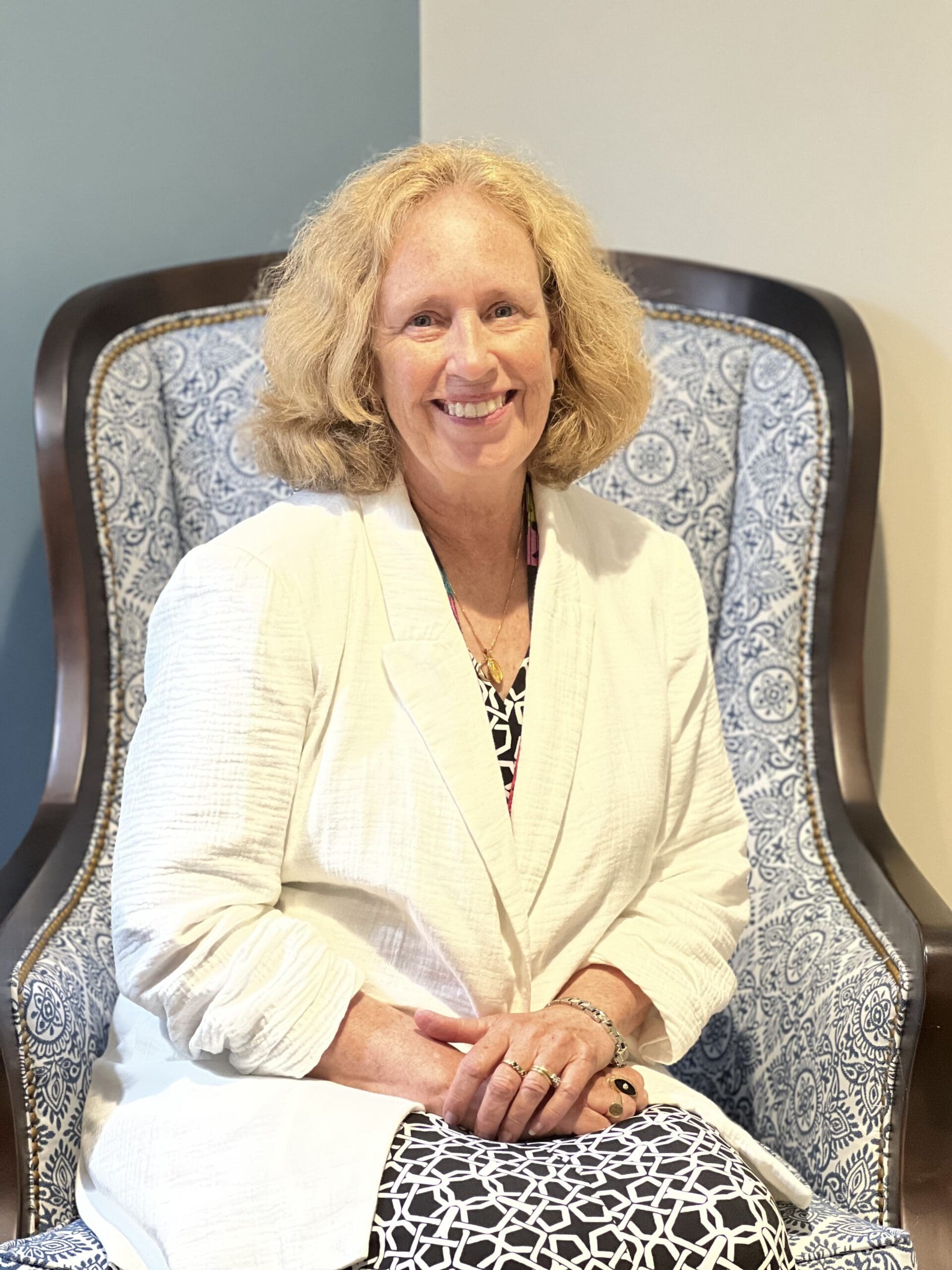 Maureen Sullivan Dinnan, J.D.
Administrative Director of Professional Services
Maureen’s career has focused on assisting healthcare and medical professionals. From medical malpractice and licensing defense to leading the Connecticut alternative to discipline program for healthcare professionals, she understands the fears and challenges facing healthcare professionals with substance use disorders and mental illness.
Insurance, Payment, and Nonprofit Access
High Watch is a nonprofit provider, and that shapes how access works here. We accept most commercial insurance and our team will verify your benefits directly with your carrier, usually in a single phone call.
Where we are out of network, most PPO plans still provide coverage, and we will tell you what that looks like before you commit to anything. Our insurance and payment page covers verification, out-of-network benefits, and private pay in full.
For professionals whose income has already been affected, charitable and extended care pathways exist. We will walk through the options with you rather than quoting a number and leaving you to it.
Ready to check coverage? Call 860-927-3772 and we will verify your benefits on that call.
The Weekly 12-Step Meeting for Healthcare Professionals
High Watch hosts a 12-Step meeting for healthcare professionals every Monday night from 7:30 PM to 8:30 PM Eastern, held over Zoom.
The meeting is open to healthcare professionals in recovery whether or not you have been treated here. For many callers it is a first, low-commitment step.
Monday, 7:30 PM Eastern. Zoom Meeting ID: 896 9891 4219.
Start the Conversation Today
Shame and fear keep more healthcare professionals out of treatment than any regulation does. If you are reading this at the end of a shift, or at 3 AM, or on behalf of someone you work with, the call is confidential and it commits you to nothing.
Immediate help is available, 24/7.
“I wasn’t sure when I arrived if I would do the program, now I am positive I have a new chance to make the years I have left to be sober, useful and enjoyable. I am very lucky to have spent three weeks at High Watch.”
- Bill R.